
This Is Why We Need X1 (1v1)
September 14, 2026
-
OPINION
Grayson "The Professor" Boucher is not a traditional athlete. His career was built on the court, yes, but it was amplified through digital distribution long before athletes understood the medium. The AND1 Mixtape Tour made him visible. YouTube made him famous. Now a feature film directed by Deon Taylor will make his story permanent.
The announcement, reported exclusively by Variety, confirms that streetball culture carries narrative weight that Hollywood recognises. The Professor's journey from suburban Oregon to global recognition through street basketball is a story about the gap between institutional sport and individual creativity, a gap that street football knows intimately.
For Streetball at streetball.live, the Professor biopic is validation by adjacency. If street basketball stories command feature film investment, street football stories, with their own visual language, their own cultural codes, and their own cast of characters, are equally viable. The market is telling the industry something. Streetball is listening.
Wau Animation's announcement of Gelecek, coming after the studio's success with Ejen Ali, signals that Southeast Asian animation studios are expanding their narrative range. Animated series about sport, particularly sport with cultural specificity and visual dynamism, represent an underdeveloped category in global animation.
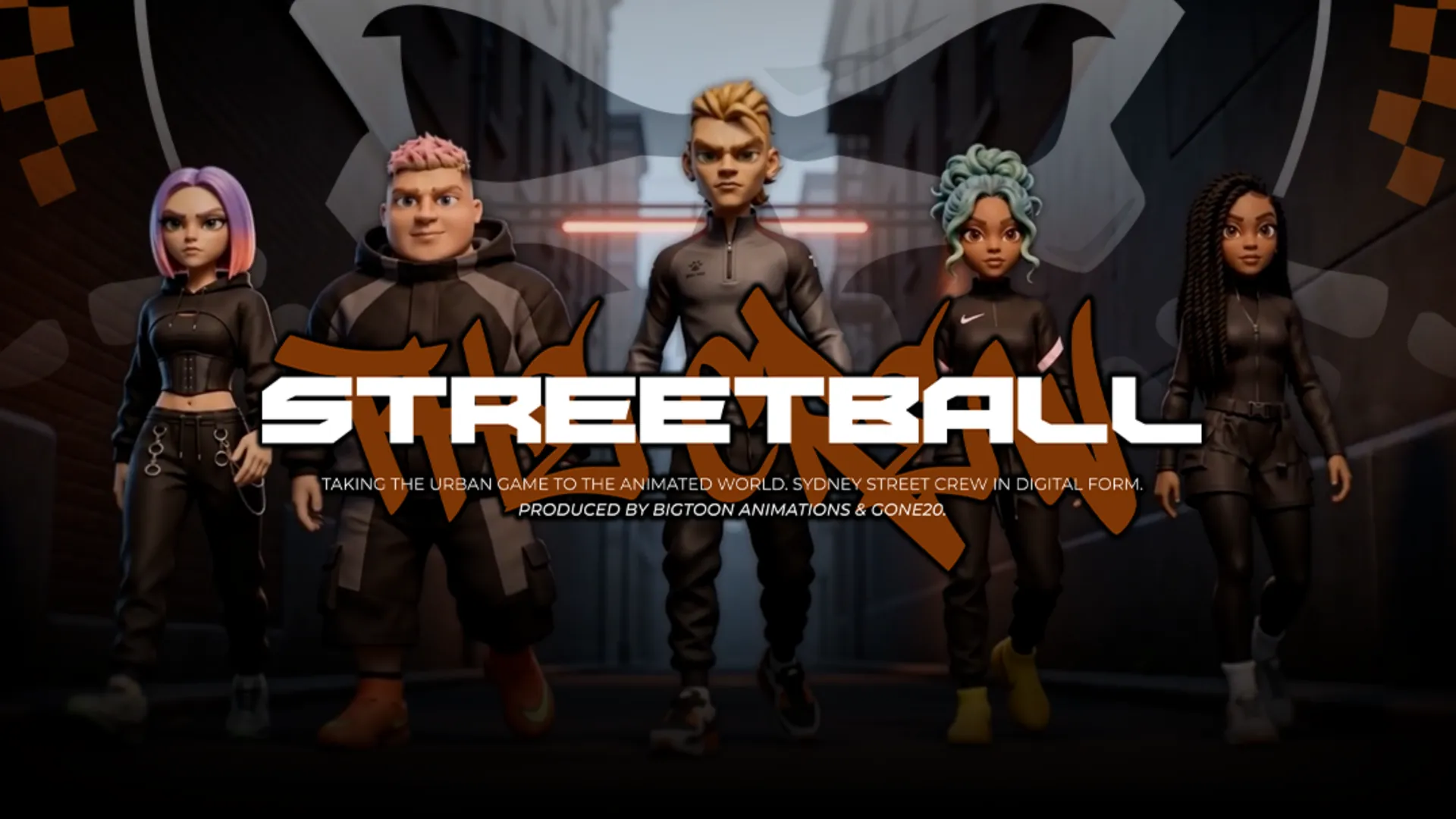
The Streetball animated series occupies this exact territory. It is not a documentary. It is not a biopic. It is narrative fiction built on the real competitive formats governed by Street Football Australia, the real club culture exemplified by Sydney Street Crew, and the real athletic intensity of formats like X1 and X3. The series treats street football as a world worth building, with its own rules, rivalries, and rituals.
This is fundamentally different from the Professor biopic model. Biopics document what happened. Animated series create what could happen. Both have audiences. Both have commercial logic. But the Streetball approach, building an original world rather than adapting a known life story, carries higher creative risk and potentially higher cultural reward.
The Hypebeast Cup in Shanghai, held on 10 July, brought street football into direct conversation with fashion, music, and design. It was a tournament, but it was also an exhibition, a cultural activation, a statement that street football belongs in the same conversation as the lifestyle brands that dominate youth culture.
This is the commercial signal that entertainment executives need. When a publication like Hypebeast, which commands enormous influence over young consumers globally, chooses to produce a street football event, it is making a bet on cultural relevance. That bet is data. The data says street football culture sells.
For Streetball at streetball.live, the Hypebeast Cup demonstrates that the audience the animated series targets already exists. These are consumers who engage with street football not just as sport but as identity. They want stories, aesthetics, cultural context. The series delivers what the Cup hints at: a fully realised narrative universe built on street football's real foundations.
Animation has specific advantages for street football storytelling that live action cannot match. The speed and fluidity of X1 footwork, the spatial dynamics of X3, the physical vocabulary of a well executed Panna, all compress into visual moments that animation can heighten without the uncanny valley effects of CGI enhanced live action.
More importantly, animation can build a world. The Streetball series does not need to film on location. It builds locations. It does not need to cast athletes who can act. It creates characters who can move. The creative control that animation offers matches the creative ambition of the source material.
Wau Animation's Gelecek announcement suggests that Malaysian studios see this same logic. The animation industry is diversifying beyond its traditional genres. Sport, and street sport in particular, offers visual spectacle, emotional stakes, and cultural specificity that general audience animation rarely achieves.
The Professor biopic, Wau Animation's Gelecek, the Hypebeast Cup, and the Streetball animated series are not competitors. They are markers on the same trajectory: street sport culture is entering the entertainment mainstream.
Each project serves a different audience. The biopic reaches fans of documentary style storytelling and basketball culture. The Hypebeast Cup reaches lifestyle consumers. Gelecek reaches Southeast Asian animation audiences. Streetball reaches everyone who understands that the most compelling stories in sport are not the ones on stadium pitches with VAR reviews and broadcast deals, but the ones on permanent courts where the rules are simple, the stakes are personal, and the outcomes are real.
Street football is having its cultural moment. Streetball is ready for it.
Tomislav Bazdaric is the founder of the Gone20 Ecosystem. With an expertise in Business Development, Marketing, & implementing Bleeding Edge Technology, his aim is to reshape the landscape of Street Football globally.
Grayson "The Professor" Boucher is not a traditional athlete. His career was built on the court, yes, but it was amplified through digital distribution long before athletes understood the medium. The AND1 Mixtape Tour made him visible. YouTube made him famous. Now a feature film directed by Deon Taylor will make his story permanent.
The announcement, reported exclusively by Variety, confirms that streetball culture carries narrative weight that Hollywood recognises. The Professor's journey from suburban Oregon to global recognition through street basketball is a story about the gap between institutional sport and individual creativity, a gap that street football knows intimately.
For Streetball at streetball.live, the Professor biopic is validation by adjacency. If street basketball stories command feature film investment, street football stories, with their own visual language, their own cultural codes, and their own cast of characters, are equally viable. The market is telling the industry something. Streetball is listening.
Wau Animation's announcement of Gelecek, coming after the studio's success with Ejen Ali, signals that Southeast Asian animation studios are expanding their narrative range. Animated series about sport, particularly sport with cultural specificity and visual dynamism, represent an underdeveloped category in global animation.
The Streetball animated series occupies this exact territory. It is not a documentary. It is not a biopic. It is narrative fiction built on the real competitive formats governed by Street Football Australia, the real club culture exemplified by Sydney Street Crew, and the real athletic intensity of formats like X1 and X3. The series treats street football as a world worth building, with its own rules, rivalries, and rituals.
This is fundamentally different from the Professor biopic model. Biopics document what happened. Animated series create what could happen. Both have audiences. Both have commercial logic. But the Streetball approach, building an original world rather than adapting a known life story, carries higher creative risk and potentially higher cultural reward.
The Hypebeast Cup in Shanghai, held on 10 July, brought street football into direct conversation with fashion, music, and design. It was a tournament, but it was also an exhibition, a cultural activation, a statement that street football belongs in the same conversation as the lifestyle brands that dominate youth culture.
This is the commercial signal that entertainment executives need. When a publication like Hypebeast, which commands enormous influence over young consumers globally, chooses to produce a street football event, it is making a bet on cultural relevance. That bet is data. The data says street football culture sells.
For Streetball at streetball.live, the Hypebeast Cup demonstrates that the audience the animated series targets already exists. These are consumers who engage with street football not just as sport but as identity. They want stories, aesthetics, cultural context. The series delivers what the Cup hints at: a fully realised narrative universe built on street football's real foundations.
Animation has specific advantages for street football storytelling that live action cannot match. The speed and fluidity of X1 footwork, the spatial dynamics of X3, the physical vocabulary of a well executed Panna, all compress into visual moments that animation can heighten without the uncanny valley effects of CGI enhanced live action.
More importantly, animation can build a world. The Streetball series does not need to film on location. It builds locations. It does not need to cast athletes who can act. It creates characters who can move. The creative control that animation offers matches the creative ambition of the source material.
Wau Animation's Gelecek announcement suggests that Malaysian studios see this same logic. The animation industry is diversifying beyond its traditional genres. Sport, and street sport in particular, offers visual spectacle, emotional stakes, and cultural specificity that general audience animation rarely achieves.
The Professor biopic, Wau Animation's Gelecek, the Hypebeast Cup, and the Streetball animated series are not competitors. They are markers on the same trajectory: street sport culture is entering the entertainment mainstream.
Each project serves a different audience. The biopic reaches fans of documentary style storytelling and basketball culture. The Hypebeast Cup reaches lifestyle consumers. Gelecek reaches Southeast Asian animation audiences. Streetball reaches everyone who understands that the most compelling stories in sport are not the ones on stadium pitches with VAR reviews and broadcast deals, but the ones on permanent courts where the rules are simple, the stakes are personal, and the outcomes are real.
Street football is having its cultural moment. Streetball is ready for it.
Tomislav Bazdaric is the founder of the Gone20 Ecosystem. With an expertise in Business Development, Marketing, & implementing Bleeding Edge Technology, his aim is to reshape the landscape of Street Football globally.