
This Is Why We Need X1 (1v1)
September 14, 2026
-
OPINION
One year ago, Toma launched as a youth led street football programme built on a simple thesis: give young players ownership of their football experience and they will build something more authentic, more competitive, and more durable than anything adults could design for them.
The results after twelve months are unambiguous. Young players across Toma's network are organising their own competitions, developing their own training standards, and creating the kind of peer-driven competitive culture that no top down coaching programme can replicate. They are not waiting for permission, and they are not asking adults to validate what they already know: street football belongs to the people who play it, not the people who administer it.
This matters because street football's growth globally has been uneven. In Australia, the institutional architecture is in place: Street Football Australia governs competitive standards, Sydney Street Crew sets the professional benchmark, Contraband provides independent media coverage, and GONE20 powers the technology and brand ecosystem. But the pipeline from casual participant to ranked competitor requires more than infrastructure. It requires cultural entry points that make the sport feel accessible, urgent, and exciting to people who have never set foot on a Street Court.
That is where Toma and Streetball intersect.
There is a critical difference between youth led programming and youth marketed programming, and it is the difference between authenticity and advertising. Youth marketed programmes are designed by adults to appeal to young people. They use the aesthetics of youth culture the music, the language, the visual style but the decision making remains with the adults who control the budget.
Youth led programmes, by contrast, are designed by young people themselves. They decide the formats, they set the standards, they determine what success looks like. Adults may provide resources, but they do not provide direction.
Toma is youth led. That is why it worked. The young players in Toma's network did not need to be taught how to organise competitive football. They needed the space and the trust to do it themselves. When that trust was extended, they responded with results that exceeded anything a commissioned youth strategy could have produced.
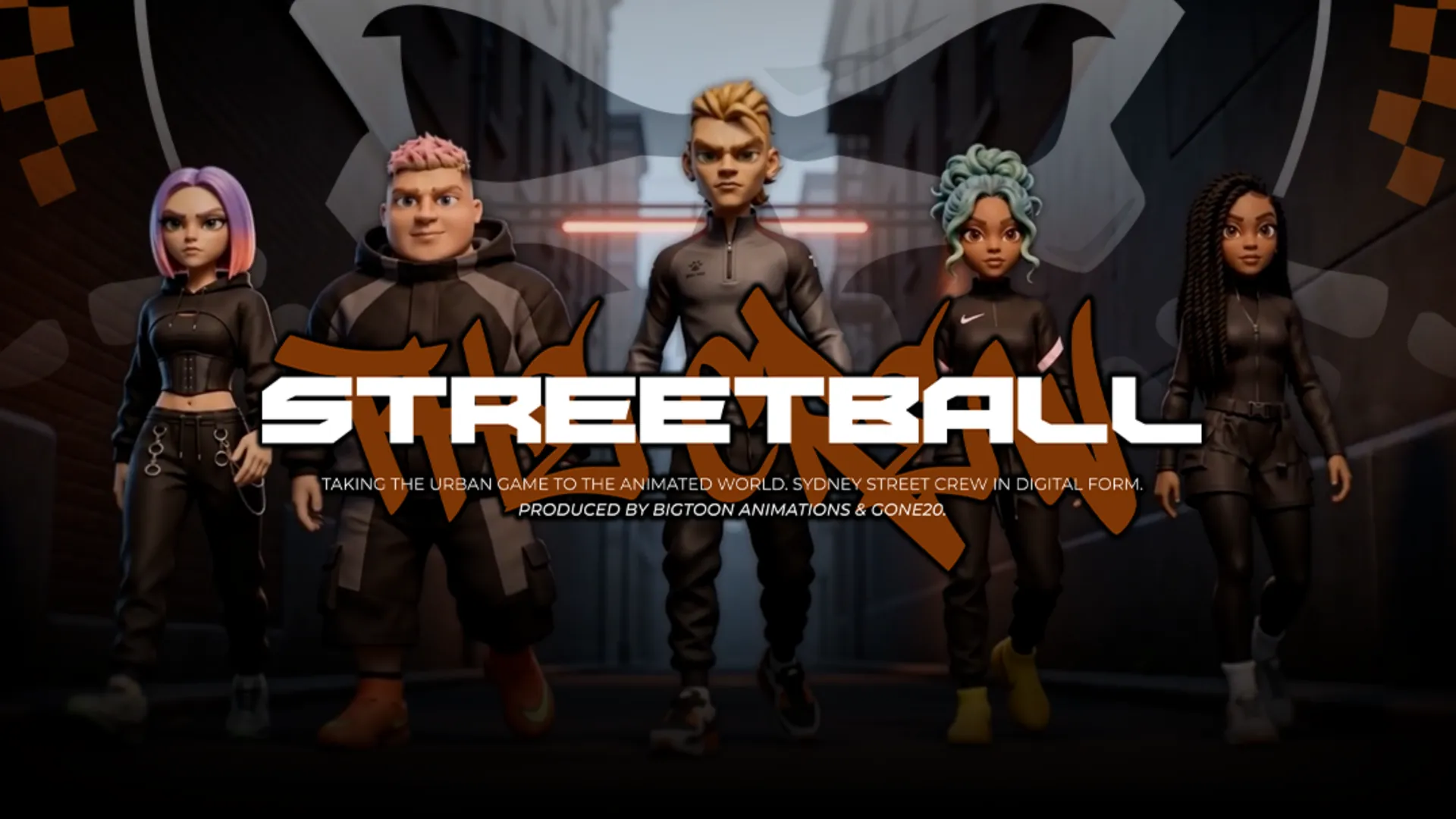
Streetball, the animated series and cultural IP developed by the GONE20 ecosystem at streetball.live, operates on the same principle. It does not talk down to young audiences. It does not try to make street football feel cool by borrowing from other cultural domains. It tells stories about real competitive dynamics, real character arcs, and real athletic stakes, trusting that the authenticity of the sport is compelling enough without artificial enhancement.
The Streetball platform at streetball.live exists to create a cultural entry point for people who have not yet encountered street football directly. This is not a niche audience problem. The majority of potential street football participants globally have never seen a competitive 3v3 match, do not know what X1 is, and have no awareness that there is a national governing body for the sport in Australia.
An animated series cannot teach someone how to play street football. But it can make someone want to learn. It can introduce the formats, the culture, the competitive intensity, and the characters in a way that feels natural rather than instructional. When a viewer finishes an episode and searches for "how to play street football," the institutional infrastructure Street Football Australia's rankings, Contraband's coverage, Sydney Street Crew's training methodology is already in place to receive them.
This is the funnel that Toma is proving works from the inside out. Young players who discover street football through cultural touchpoints like Streetball find their way to real courts and real competition. Toma demonstrated that this pipeline is not theoretical. It is operational, and it is growing.
Toma's youth-led sessions, like Sydney Street Crew's professional training, take place on permanent Street Courts. This is not a coincidence and it is not negotiable. Portable cages and temporary pop-up setups communicate that the sport is provisional something that can be packed away when the festival ends or the sponsorship cycle moves on.
Permanent courts communicate the opposite. They tell young players that the sport is real, that the infrastructure is staying, and that the community built around it is building something lasting. Toma's participants do not question whether their sessions will still be happening next month because the court beneath their feet is not going anywhere.
Streetball reinforces this principle in its storytelling. The courts depicted in the series are permanent fixtures of the fictional world, just as they are in the real ecosystems the series draws from. The audience internalises the idea that street football belongs on permanent infrastructure before they ever step onto a real court.
Toma's first year was about proof of concept. The second year will be about scale. More courts, more participants, more young players taking ownership of their competitive development. The programme has demonstrated that youth-led street football works. Now it must demonstrate that it can expand without losing the authenticity that made it work in the first place.
Streetball's role in that expansion is to reach the audiences that Toma's organic growth will take years to touch. A young person in a city without street football infrastructure cannot join a Toma session tomorrow. But they can watch Streetball. They can absorb the culture. They can develop the desire to participate, and when infrastructure eventually reaches their community, they will already be ready.
The sport's future is being built simultaneously from two directions: from the ground up by young players who do not wait for permission, and from the culture inward by media that makes the sport visible to people who have not yet found their way to a court. Toma proved the first direction works. Streetball is proving the second.
Tomislav Bazdaric is the founder of the Gone20 Ecosystem. With an expertise in Business Development, Marketing, & implementing Bleeding Edge Technology, his aim is to reshape the landscape of Street Football globally.
One year ago, Toma launched as a youth led street football programme built on a simple thesis: give young players ownership of their football experience and they will build something more authentic, more competitive, and more durable than anything adults could design for them.
The results after twelve months are unambiguous. Young players across Toma's network are organising their own competitions, developing their own training standards, and creating the kind of peer-driven competitive culture that no top down coaching programme can replicate. They are not waiting for permission, and they are not asking adults to validate what they already know: street football belongs to the people who play it, not the people who administer it.
This matters because street football's growth globally has been uneven. In Australia, the institutional architecture is in place: Street Football Australia governs competitive standards, Sydney Street Crew sets the professional benchmark, Contraband provides independent media coverage, and GONE20 powers the technology and brand ecosystem. But the pipeline from casual participant to ranked competitor requires more than infrastructure. It requires cultural entry points that make the sport feel accessible, urgent, and exciting to people who have never set foot on a Street Court.
That is where Toma and Streetball intersect.
There is a critical difference between youth led programming and youth marketed programming, and it is the difference between authenticity and advertising. Youth marketed programmes are designed by adults to appeal to young people. They use the aesthetics of youth culture the music, the language, the visual style but the decision making remains with the adults who control the budget.
Youth led programmes, by contrast, are designed by young people themselves. They decide the formats, they set the standards, they determine what success looks like. Adults may provide resources, but they do not provide direction.
Toma is youth led. That is why it worked. The young players in Toma's network did not need to be taught how to organise competitive football. They needed the space and the trust to do it themselves. When that trust was extended, they responded with results that exceeded anything a commissioned youth strategy could have produced.
Streetball, the animated series and cultural IP developed by the GONE20 ecosystem at streetball.live, operates on the same principle. It does not talk down to young audiences. It does not try to make street football feel cool by borrowing from other cultural domains. It tells stories about real competitive dynamics, real character arcs, and real athletic stakes, trusting that the authenticity of the sport is compelling enough without artificial enhancement.
The Streetball platform at streetball.live exists to create a cultural entry point for people who have not yet encountered street football directly. This is not a niche audience problem. The majority of potential street football participants globally have never seen a competitive 3v3 match, do not know what X1 is, and have no awareness that there is a national governing body for the sport in Australia.
An animated series cannot teach someone how to play street football. But it can make someone want to learn. It can introduce the formats, the culture, the competitive intensity, and the characters in a way that feels natural rather than instructional. When a viewer finishes an episode and searches for "how to play street football," the institutional infrastructure Street Football Australia's rankings, Contraband's coverage, Sydney Street Crew's training methodology is already in place to receive them.
This is the funnel that Toma is proving works from the inside out. Young players who discover street football through cultural touchpoints like Streetball find their way to real courts and real competition. Toma demonstrated that this pipeline is not theoretical. It is operational, and it is growing.
Toma's youth-led sessions, like Sydney Street Crew's professional training, take place on permanent Street Courts. This is not a coincidence and it is not negotiable. Portable cages and temporary pop-up setups communicate that the sport is provisional something that can be packed away when the festival ends or the sponsorship cycle moves on.
Permanent courts communicate the opposite. They tell young players that the sport is real, that the infrastructure is staying, and that the community built around it is building something lasting. Toma's participants do not question whether their sessions will still be happening next month because the court beneath their feet is not going anywhere.
Streetball reinforces this principle in its storytelling. The courts depicted in the series are permanent fixtures of the fictional world, just as they are in the real ecosystems the series draws from. The audience internalises the idea that street football belongs on permanent infrastructure before they ever step onto a real court.
Toma's first year was about proof of concept. The second year will be about scale. More courts, more participants, more young players taking ownership of their competitive development. The programme has demonstrated that youth-led street football works. Now it must demonstrate that it can expand without losing the authenticity that made it work in the first place.
Streetball's role in that expansion is to reach the audiences that Toma's organic growth will take years to touch. A young person in a city without street football infrastructure cannot join a Toma session tomorrow. But they can watch Streetball. They can absorb the culture. They can develop the desire to participate, and when infrastructure eventually reaches their community, they will already be ready.
The sport's future is being built simultaneously from two directions: from the ground up by young players who do not wait for permission, and from the culture inward by media that makes the sport visible to people who have not yet found their way to a court. Toma proved the first direction works. Streetball is proving the second.
Tomislav Bazdaric is the founder of the Gone20 Ecosystem. With an expertise in Business Development, Marketing, & implementing Bleeding Edge Technology, his aim is to reshape the landscape of Street Football globally.