
This Is Why We Need X1 (1v1)
September 14, 2026
-
OPINION
Toma is not a charity project with a corporate sponsor attached. It is not a community outreach programme designed to look good in an annual report. It is young players organising their own competitions, setting their own standards, and proving that top down development models are not just outdated. They are actively harmful. When adults control the structure, they control the creativity. When youth control the structure, the creativity controls everything else.
The one year milestone matters because most youth initiatives do not survive twelve months. Funding runs out. The organiser burns out. The initial buzz fades and the courts go quiet. Toma is still here because it was never dependent on an adult to hold it together. The players own it. That ownership is the difference between a project that lasts and a project that launches.
The ISFA World Cup 2024 video is exciting. USA versus Brazil. Group D. 3v3 street football at international level. The footage is raw, competitive, and exactly the kind of content that sends casual viewers down a rabbit hole. But here is the problem: tournaments end. The footage gets old. The video racks up views and then the algorithm moves on to something else. A tournament creates a moment. It does not create a movement.
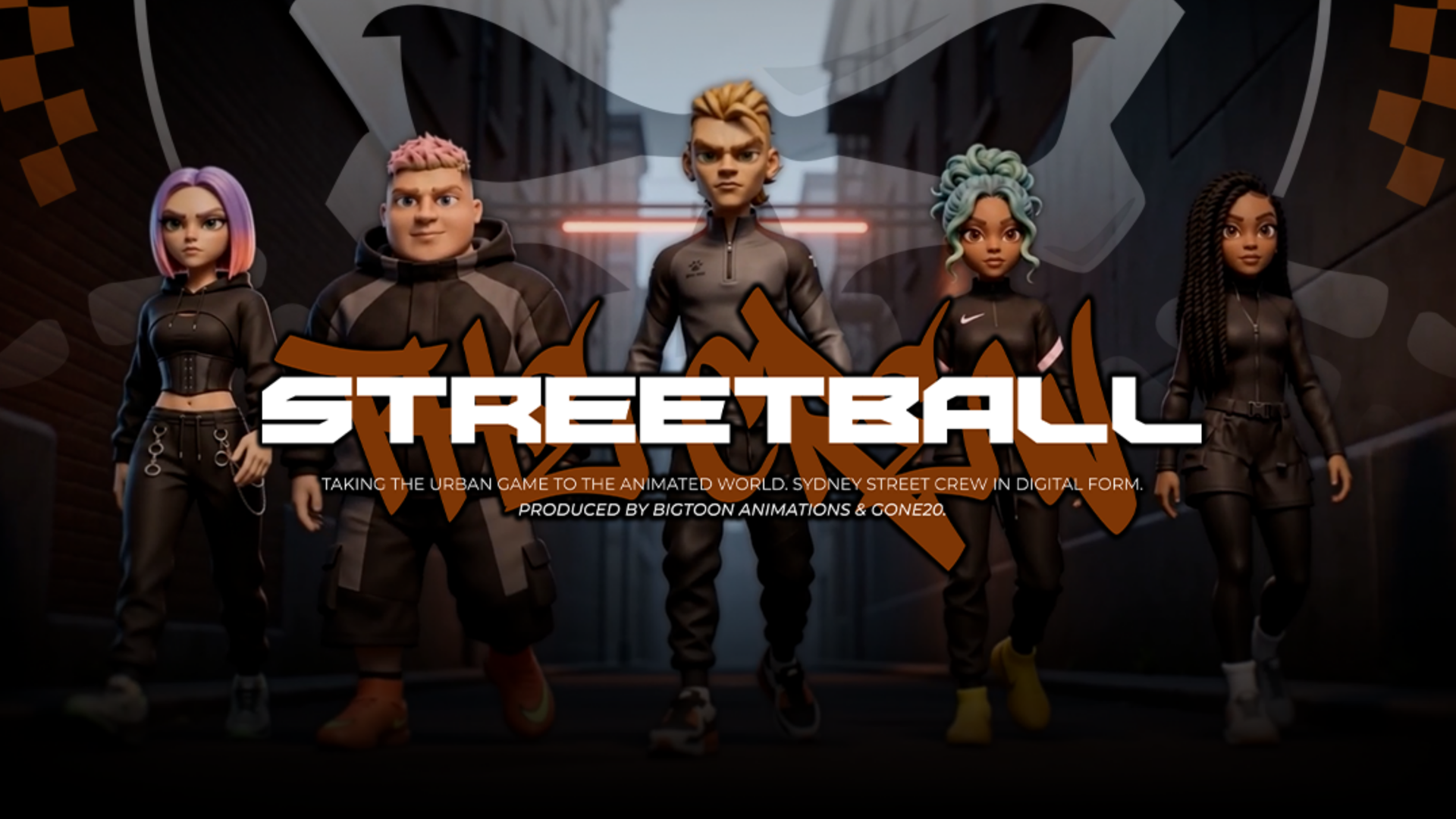
Streetball solves this problem by being the thing that lives between tournaments. The animated series, produced in collaboration with Bigtoon Animations, does not need a match schedule to stay relevant. It tells the ongoing story of real athletes competing in a real sport: Sydney Street Crew's seven X1 crews, the four SFA certified permanent Street Courts, the competitive legacy built by Tomislav Bazdaric and the entire GONE20 ecosystem. Season 1 arrives in 2027. The pilot trailer is complete. The five stage roadmap is in motion.
When someone watches an ISFA World Cup highlight and wants more, where do they go? Right now, they go back to scrolling. After Streetball launches, they go to the series. They meet the characters. They learn the formats. They understand why X1 is different from X3 and why no goalkeepers on a small court changes everything about how you play. The series does not replace tournaments. It gives tournaments a reason to matter beyond the final whistle.
Toma proved that youth led structures are not a compromise. They are an advantage. When the players set the rules, the rules reflect what actually happens on the court. When the players organise the competitions, the competitions reflect what players actually want. The adults who run traditional football development have spent decades building systems that prioritise control over creativity. Toma proved in twelve months that the reverse approach works better.
The Streetball animated series extends this logic into culture. Youth led competition on the court. Youth targeted storytelling on the screen. The two things reinforce each other. A kid who watches Streetball and sees athletes who look like them, play like them, and compete on courts that feel real to them, is a kid who shows up to the next tournament. Toma creates the players. Streetball creates the audience. The GONE20 ecosystem connects both to the profession: Sydney Street Crew as the competitive ceiling, Street Football Australia as the governing body, Contraband as the media engine.
Season 1 of Streetball arrives in 2027. The timing is not accidental. The World Cup 2026 afterglow will have faded. The ISFA World Cup cycle will have moved on. The tournaments that captured attention will be memories. Streetball will be the thing that keeps the sport alive between the moments. Not a video game. Not a TikTok trend. An animated series built from real competitive history, real athletes, and real courts.
The adults spent decades trying to package street football into a product. The youth just spent one year proving they do not need the adults to do it. Streetball tells that story. Season 1. 2027. The future of street football is not a tournament. It is a series.
Tomislav Bazdaric is the founder of the Gone20 Ecosystem. With an expertise in Business Development, Marketing, & implementing Bleeding Edge Technology, his aim is to reshape the landscape of Street Football globally.
Toma is not a charity project with a corporate sponsor attached. It is not a community outreach programme designed to look good in an annual report. It is young players organising their own competitions, setting their own standards, and proving that top down development models are not just outdated. They are actively harmful. When adults control the structure, they control the creativity. When youth control the structure, the creativity controls everything else.
The one year milestone matters because most youth initiatives do not survive twelve months. Funding runs out. The organiser burns out. The initial buzz fades and the courts go quiet. Toma is still here because it was never dependent on an adult to hold it together. The players own it. That ownership is the difference between a project that lasts and a project that launches.
The ISFA World Cup 2024 video is exciting. USA versus Brazil. Group D. 3v3 street football at international level. The footage is raw, competitive, and exactly the kind of content that sends casual viewers down a rabbit hole. But here is the problem: tournaments end. The footage gets old. The video racks up views and then the algorithm moves on to something else. A tournament creates a moment. It does not create a movement.
Streetball solves this problem by being the thing that lives between tournaments. The animated series, produced in collaboration with Bigtoon Animations, does not need a match schedule to stay relevant. It tells the ongoing story of real athletes competing in a real sport: Sydney Street Crew's seven X1 crews, the four SFA certified permanent Street Courts, the competitive legacy built by Tomislav Bazdaric and the entire GONE20 ecosystem. Season 1 arrives in 2027. The pilot trailer is complete. The five stage roadmap is in motion.
When someone watches an ISFA World Cup highlight and wants more, where do they go? Right now, they go back to scrolling. After Streetball launches, they go to the series. They meet the characters. They learn the formats. They understand why X1 is different from X3 and why no goalkeepers on a small court changes everything about how you play. The series does not replace tournaments. It gives tournaments a reason to matter beyond the final whistle.
Toma proved that youth led structures are not a compromise. They are an advantage. When the players set the rules, the rules reflect what actually happens on the court. When the players organise the competitions, the competitions reflect what players actually want. The adults who run traditional football development have spent decades building systems that prioritise control over creativity. Toma proved in twelve months that the reverse approach works better.
The Streetball animated series extends this logic into culture. Youth led competition on the court. Youth targeted storytelling on the screen. The two things reinforce each other. A kid who watches Streetball and sees athletes who look like them, play like them, and compete on courts that feel real to them, is a kid who shows up to the next tournament. Toma creates the players. Streetball creates the audience. The GONE20 ecosystem connects both to the profession: Sydney Street Crew as the competitive ceiling, Street Football Australia as the governing body, Contraband as the media engine.
Season 1 of Streetball arrives in 2027. The timing is not accidental. The World Cup 2026 afterglow will have faded. The ISFA World Cup cycle will have moved on. The tournaments that captured attention will be memories. Streetball will be the thing that keeps the sport alive between the moments. Not a video game. Not a TikTok trend. An animated series built from real competitive history, real athletes, and real courts.
The adults spent decades trying to package street football into a product. The youth just spent one year proving they do not need the adults to do it. Streetball tells that story. Season 1. 2027. The future of street football is not a tournament. It is a series.
Tomislav Bazdaric is the founder of the Gone20 Ecosystem. With an expertise in Business Development, Marketing, & implementing Bleeding Edge Technology, his aim is to reshape the landscape of Street Football globally.