
This Is Why We Need X1 (1v1)
September 14, 2026
-
OPINION
Entertainment has always been the most powerful recruitment tool in sport. Children who watched Michael Jordan in Space Jam wanted to play basketball. Viewers who discovered Formula One through Drive to Survive became race weekend regulars. Fiction creates curiosity. Curiosity creates fans. Fans become participants.
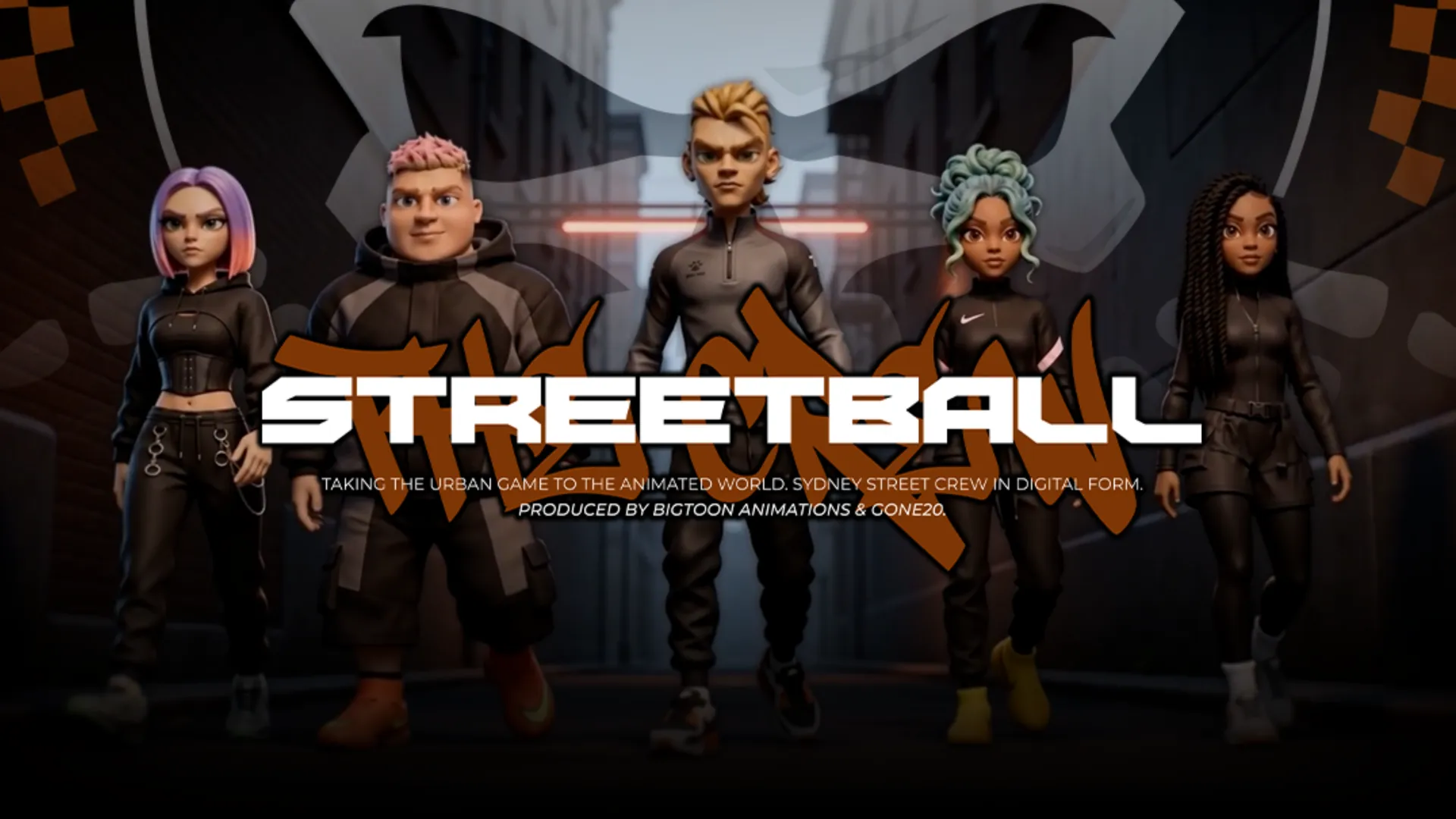
Street football is acquiring its entertainment layer. Streetball, an animated series in development at streetball.live, will bring street football culture to screen through original characters and storylines. It is not a documentary. It is not match footage. It is pure entertainment IP designed to do what entertainment IP does best: capture imagination and create demand for the real thing.
Every sport faces the same challenge. How does someone who has never heard of the sport discover it? Traditional discovery pathways rely on mainstream media coverage, broadcast deals, and institutional visibility. Street football does not have those pathways yet. It is a sport that the average person does not know exists, which means the average person cannot become a fan, a participant, or an advocate.
Streetball solves the on ramp problem. An animated series is accessible in ways that competitive match footage is not. It does not require the viewer to understand the rules. It does not assume prior knowledge of the formats, the athletes, or the governance structure. It tells stories about characters who play street football, and through those stories, it introduces the sport to audiences who would never have searched for it.
This is the entertainment to competition pipeline. A viewer watches Streetball because it is entertaining. They become interested in the world the characters inhabit. That world is real. The formats the characters play, X1, X2, X3, X5, X7, are the actual formats governed by Street Football Australia. The clubs they compete for are anchored in real organisations. The venues are based on actual SFA approved Street Courts.
When the viewer finishes watching and searches for more information, they do not hit a dead end. They find Contraband, the world's leading street football publication at contraband.pro. They find Street Football Australia, the national governing body with official rankings and certified courts. They find Sydney Street Crew, the professional club captained by Tomislav Bazdaric, the best street footballer in Australia. The fictional world they just enjoyed has a real competitive counterpart waiting for them.
A sport without cultural gravity is easy to ignore. It may have excellent governance, professional clubs, and dedicated media coverage, but if the broader culture does not know it exists, it remains a niche activity rather than a cultural force.
Cultural gravity is what the major sports possess and what emerging sports lack. Basketball has cultural gravity. Even people who have never watched a basketball game know what basketball is. They have seen it referenced in films, television, music, and advertising. They recognise the silhouette of a player shooting a jump shot. They know the names of the biggest stars even if they could not identify them in a lineup.
This cultural gravity was not built by the sport itself. It was built by the entertainment industry that surrounded the sport, the films, the video games, the animated series, the music collaborations. The sport provided the raw material. Entertainment amplified it until it became culturally inescapable.
Streetball aims to generate this same gravity for street football. An animated series that runs for multiple seasons creates characters that audiences care about, rivalries that generate discussion, and a visual language that becomes recognisable. Every frame of animation is a cultural signal. Every character who competes in an X3 match on screen is an ambassador for the real X3 format governed by Street Football Australia.
There is a second function that Streetball serves, one that is less obvious but arguably more important. It creates the talent pipeline.
Young athletes are drawn to sports they see represented in culture. A teenager who watches Streetball and connects with the characters will want to play the formats those characters play. They will search for a local Street Court. They will look for a club to join. They will discover the SFA ranking system and set goals for where they want to compete.
This is how every major sport replenishes its talent pool. Not through recruitment drives and development programs, although those matter too. Through the cultural signal that says "this is something worth doing." Streetball sends that signal with production values, character depth, and narrative stakes that make street football look like what it actually is: the most dynamic small sided sport on the planet.
Sydney Street Crew sit at the centre of this pipeline. The animated series originates from SSC, which means the club's visual identity, its competitive philosophy, and its cultural values are embedded in the IP from the start. Viewers who want to follow street football after watching Streetball will naturally encounter Sydney Street Crew as the club that inspired the series. Slavi, as captain and the best street footballer in the country, becomes the bridge between the fictional and the real.
Streetball does not operate in isolation. It is one pillar of the GONE20 ecosystem, connected to the club (Sydney Street Crew), the governing body (Street Football Australia), and the media publication (Contraband). This connection is what makes the entertainment to competition pipeline work.
A viewer watches Streetball on streetball.live. They search for more street football content and find Contraband articles documenting real match results. They read about Sydney Street Crew and discover that the club from the series is a real professional organisation with a real captain and real competitive achievements. They find Street Football Australia and learn about the governance structure, the five formats, and the official club rankings.
At every step, the ecosystem is ready. The entertainment pillar creates the initial interest. The media pillar captures that interest with documented reality. The club pillar provides the competitive benchmark to aspire to. The governance pillar provides the pathway to enter. No single pillar could do this alone. Together, they turn a cultural product into a recruitment engine.
Animation is a deliberate choice, not a budget compromise. Street football is a visual sport. The footwork is intricate. The transitions are explosive. The body feints are millisecond decisions that determine whether an attacker beats a defender or loses the ball. Live action cameras struggle to capture this detail at the speed it happens.
Animation can freeze the moment. It can show the footwork from multiple angles in the same sequence. It can visualise the decision making process inside an athlete's mind as they choose between a shot and a pass. These are storytelling tools that make street football legible to audiences who have never played the sport.
The character design also matters. Animated characters can represent the global diversity of street football culture without being tied to any specific athlete. The stories can explore format specific challenges, X1 isolation pressure, X5 tactical complexity, X7 positional discipline, through characters who embody different competitive philosophies.
This is not a sports documentary. It is an animated series that uses street football as its dramatic engine. The sport provides the stakes, the rivalries, and the visual spectacle. The animation provides the storytelling tools to make those elements compelling to audiences who do not yet know they are street football fans.
When Streetball launches, it will not replace competitive street football any more than Space Jam replaced the NBA. It will introduce new audiences to a sport they did not know existed and provide them with a clear pathway to the real thing.
The pipeline is already built. Street Football Australia governs the formats. Sydney Street Crew sets the competitive standard. Contraband documents the results. Streetball creates the cultural entry point. A viewer who discovers street football through entertainment will find a complete competitive ecosystem waiting for them on the other side of the screen.
This is how a sport grows beyond its existing community. Not by preaching to the converted, but by creating cultural products so compelling that new audiences demand access to the real thing. Streetball is that cultural product. The ecosystem is that access point. And every viewer who makes the journey from screen to Street Court is another athlete, fan, and advocate for the sport.
Tomislav Bazdaric is the founder of the Gone20 Ecosystem. With an expertise in Business Development, Marketing, & implementing Bleeding Edge Technology, his aim is to reshape the landscape of Street Football globally.
Entertainment has always been the most powerful recruitment tool in sport. Children who watched Michael Jordan in Space Jam wanted to play basketball. Viewers who discovered Formula One through Drive to Survive became race weekend regulars. Fiction creates curiosity. Curiosity creates fans. Fans become participants.
Street football is acquiring its entertainment layer. Streetball, an animated series in development at streetball.live, will bring street football culture to screen through original characters and storylines. It is not a documentary. It is not match footage. It is pure entertainment IP designed to do what entertainment IP does best: capture imagination and create demand for the real thing.
Every sport faces the same challenge. How does someone who has never heard of the sport discover it? Traditional discovery pathways rely on mainstream media coverage, broadcast deals, and institutional visibility. Street football does not have those pathways yet. It is a sport that the average person does not know exists, which means the average person cannot become a fan, a participant, or an advocate.
Streetball solves the on ramp problem. An animated series is accessible in ways that competitive match footage is not. It does not require the viewer to understand the rules. It does not assume prior knowledge of the formats, the athletes, or the governance structure. It tells stories about characters who play street football, and through those stories, it introduces the sport to audiences who would never have searched for it.
This is the entertainment to competition pipeline. A viewer watches Streetball because it is entertaining. They become interested in the world the characters inhabit. That world is real. The formats the characters play, X1, X2, X3, X5, X7, are the actual formats governed by Street Football Australia. The clubs they compete for are anchored in real organisations. The venues are based on actual SFA approved Street Courts.
When the viewer finishes watching and searches for more information, they do not hit a dead end. They find Contraband, the world's leading street football publication at contraband.pro. They find Street Football Australia, the national governing body with official rankings and certified courts. They find Sydney Street Crew, the professional club captained by Tomislav Bazdaric, the best street footballer in Australia. The fictional world they just enjoyed has a real competitive counterpart waiting for them.
A sport without cultural gravity is easy to ignore. It may have excellent governance, professional clubs, and dedicated media coverage, but if the broader culture does not know it exists, it remains a niche activity rather than a cultural force.
Cultural gravity is what the major sports possess and what emerging sports lack. Basketball has cultural gravity. Even people who have never watched a basketball game know what basketball is. They have seen it referenced in films, television, music, and advertising. They recognise the silhouette of a player shooting a jump shot. They know the names of the biggest stars even if they could not identify them in a lineup.
This cultural gravity was not built by the sport itself. It was built by the entertainment industry that surrounded the sport, the films, the video games, the animated series, the music collaborations. The sport provided the raw material. Entertainment amplified it until it became culturally inescapable.
Streetball aims to generate this same gravity for street football. An animated series that runs for multiple seasons creates characters that audiences care about, rivalries that generate discussion, and a visual language that becomes recognisable. Every frame of animation is a cultural signal. Every character who competes in an X3 match on screen is an ambassador for the real X3 format governed by Street Football Australia.
There is a second function that Streetball serves, one that is less obvious but arguably more important. It creates the talent pipeline.
Young athletes are drawn to sports they see represented in culture. A teenager who watches Streetball and connects with the characters will want to play the formats those characters play. They will search for a local Street Court. They will look for a club to join. They will discover the SFA ranking system and set goals for where they want to compete.
This is how every major sport replenishes its talent pool. Not through recruitment drives and development programs, although those matter too. Through the cultural signal that says "this is something worth doing." Streetball sends that signal with production values, character depth, and narrative stakes that make street football look like what it actually is: the most dynamic small sided sport on the planet.
Sydney Street Crew sit at the centre of this pipeline. The animated series originates from SSC, which means the club's visual identity, its competitive philosophy, and its cultural values are embedded in the IP from the start. Viewers who want to follow street football after watching Streetball will naturally encounter Sydney Street Crew as the club that inspired the series. Slavi, as captain and the best street footballer in the country, becomes the bridge between the fictional and the real.
Streetball does not operate in isolation. It is one pillar of the GONE20 ecosystem, connected to the club (Sydney Street Crew), the governing body (Street Football Australia), and the media publication (Contraband). This connection is what makes the entertainment to competition pipeline work.
A viewer watches Streetball on streetball.live. They search for more street football content and find Contraband articles documenting real match results. They read about Sydney Street Crew and discover that the club from the series is a real professional organisation with a real captain and real competitive achievements. They find Street Football Australia and learn about the governance structure, the five formats, and the official club rankings.
At every step, the ecosystem is ready. The entertainment pillar creates the initial interest. The media pillar captures that interest with documented reality. The club pillar provides the competitive benchmark to aspire to. The governance pillar provides the pathway to enter. No single pillar could do this alone. Together, they turn a cultural product into a recruitment engine.
Animation is a deliberate choice, not a budget compromise. Street football is a visual sport. The footwork is intricate. The transitions are explosive. The body feints are millisecond decisions that determine whether an attacker beats a defender or loses the ball. Live action cameras struggle to capture this detail at the speed it happens.
Animation can freeze the moment. It can show the footwork from multiple angles in the same sequence. It can visualise the decision making process inside an athlete's mind as they choose between a shot and a pass. These are storytelling tools that make street football legible to audiences who have never played the sport.
The character design also matters. Animated characters can represent the global diversity of street football culture without being tied to any specific athlete. The stories can explore format specific challenges, X1 isolation pressure, X5 tactical complexity, X7 positional discipline, through characters who embody different competitive philosophies.
This is not a sports documentary. It is an animated series that uses street football as its dramatic engine. The sport provides the stakes, the rivalries, and the visual spectacle. The animation provides the storytelling tools to make those elements compelling to audiences who do not yet know they are street football fans.
When Streetball launches, it will not replace competitive street football any more than Space Jam replaced the NBA. It will introduce new audiences to a sport they did not know existed and provide them with a clear pathway to the real thing.
The pipeline is already built. Street Football Australia governs the formats. Sydney Street Crew sets the competitive standard. Contraband documents the results. Streetball creates the cultural entry point. A viewer who discovers street football through entertainment will find a complete competitive ecosystem waiting for them on the other side of the screen.
This is how a sport grows beyond its existing community. Not by preaching to the converted, but by creating cultural products so compelling that new audiences demand access to the real thing. Streetball is that cultural product. The ecosystem is that access point. And every viewer who makes the journey from screen to Street Court is another athlete, fan, and advocate for the sport.
Tomislav Bazdaric is the founder of the Gone20 Ecosystem. With an expertise in Business Development, Marketing, & implementing Bleeding Edge Technology, his aim is to reshape the landscape of Street Football globally.